
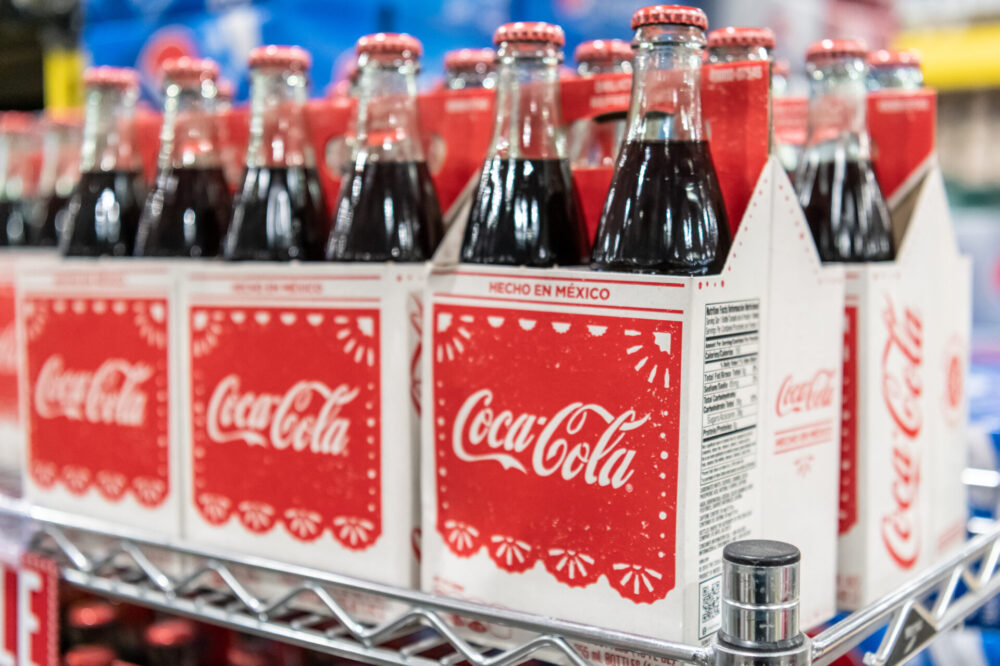
If you’ve ever ordered tacos and someone at the table proudly said, “Do they have Mexican Coke?” you already know this isn’t just soda.
It’s a thing.
But what actually makes Mexican Coke different? Is it marketing? Is it nostalgia? Or does it really taste better?
Let’s break it down.
The biggest difference people talk about is the sweetener.
Mexican Coke is typically made with cane sugar, while most Coca-Cola produced in the United States uses high-fructose corn syrup (HFCS).
Cane sugar tends to create:
Some people swear they can taste the difference immediately. Others say it’s subtle. But the ingredient difference is real and it’s the main reason Mexican Coke built its cult following in the U.S.
Mexican Coke is most commonly sold in thick glass bottles, not plastic. And that matters.
Glass:
There’s something about popping open a glass bottle with tacos on the table that just hits differently.
It slows you down. It feels intentional. It feels classic.
Mexican Coke started gaining popularity in the U.S. in the early 2000s, especially as consumers became more interested in “real sugar” products.
For many people, it tastes like:
Even if the flavor difference is subtle, nostalgia amplifies the experience.
And let’s be honest tacos and nostalgia go very well together.
There’s a reason you see Mexican Coke in taquerias everywhere.
The carbonation cuts through:
The sweetness balances heat. The bubbles reset your palate. It’s not fancy but it’s wildly satisfying.
So… Is Mexican Coke Better?
That depends on who you ask.
Nutritionally, it’s still soda.
Flavor-wise, many people prefer the cane sugar profile.
Experience-wise? The glass bottle wins every time.
What makes Mexican Coke different isn’t just one ingredient it’s the combination of sweetness, packaging, culture, and ritual.