
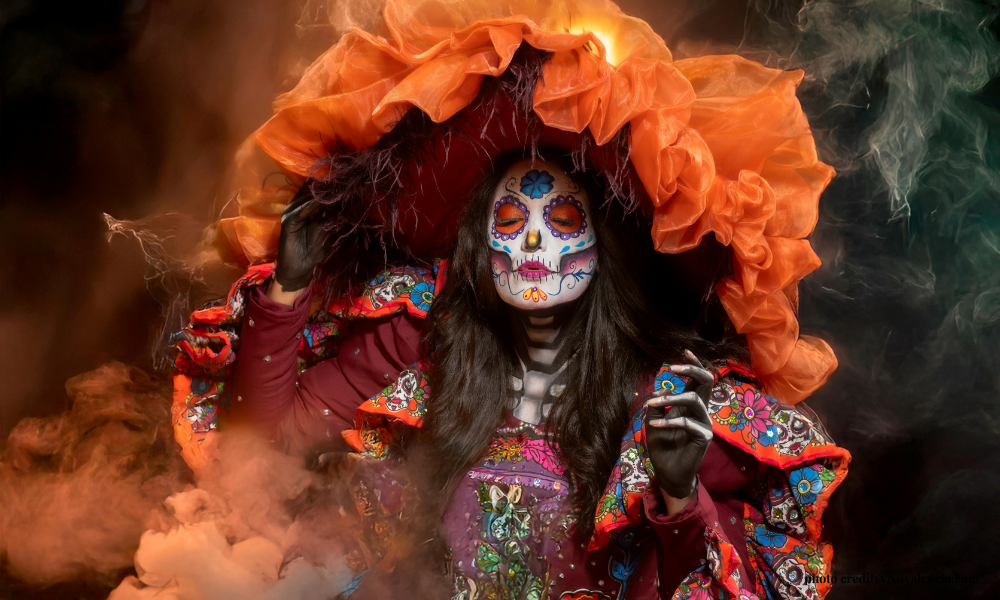
The most thoughtful restaurant celebrations are moving beyond spooky cocktails and decorative calaveras to ask a better question: Who are we remembering?
A marigold garnish can make a beautiful cocktail. It cannot, by itself, make that cocktail meaningful.
That distinction is beginning to shape some of this year’s most interesting Día de Muertos menus. Across the country, restaurants are inviting guests to add names and photographs to ofrendas, telling the stories behind family recipes and organizing dishes around memory, harvest and the lives of people who came before.
The emerging question is no longer simply, “How do we make this drink look festive?”
It is, “Whose story does this tell?”
That small change gives restaurants a chance to offer something more lasting than another black margarita with a plastic skull clipped to the rim.
Food for the Journey
Día de Muertos, traditionally observed November 1 and 2, is not Mexican Halloween. The holidays share a place on the calendar and a healthy appreciation for skeletons, but their emotional centers are different.
Día de Muertos commemorates the temporary return of deceased relatives and loved ones. Families prepare favorite foods, arrange photographs and personal possessions, light candles and create paths of cempasúchil petals to help guide spirits home.
Food is not merely party catering. It is part of the invitation.
According to UNESCO, families traditionally place the deceased’s favorite dishes around home altars and tombs. The observance also coincides with the completion of the annual maize-growing cycle in many Indigenous Mexican communities. UNESCO’s description of the Indigenous festivity
An ofrenda commonly includes water for returning spirits, papel picado representing wind, candles representing fire and food representing the earth. Photographs and personal objects identify the people being welcomed back. Smithsonian’s Día de Muertos guide
That makes a restaurant menu an unusually appropriate storytelling medium. A dish can hold a person’s memory in a way that themed décor cannot.
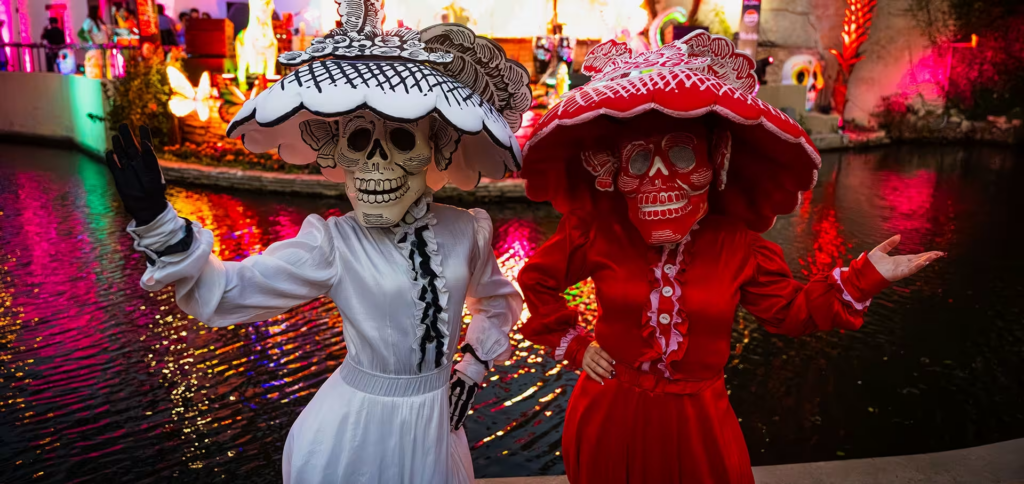
One of the clearest examples is happening along the San Antonio River Walk.
Its 2026 Culinary Spirits program brings together 15 restaurants and bars, each offering food or drinks inspired by loved ones, family traditions and the cultural history of San Antonio. Guests can explore not only what each establishment created, but the personal story behind it.
The event’s language is telling. It promises “one story, flavor and sip at a time,” with creations inspired by family recipes, South Texas citrus and the people and land that preceded today’s chefs and bartenders.
That is a more interesting proposition than a collection of orange cocktails. It turns the menu into a map of local memory. Culinary Spirits, running through Nov. 2
It also gives writers and diners better questions to ask: Who taught you this recipe? Who grew these ingredients? Who used to sit at this table?
The Ofrenda Becomes Participatory
At Maya in New York City, visitors can add a loved one’s name to a glowing ofrenda before ordering from a menu built around marigold, yellow corn, Ataúlfo mango, piloncillo and achiote.
The experience includes two zero-proof drinks, an important detail for a holiday centered on families and community rather than alcohol alone.
ts dishes move through a symbolic arc of light, transformation and remembrance, including a short rib preparation and pumpkin brûlée. Maya’s El Sol experience, through Nov. 3
A recent farm dinner in Bloomfield, Connecticut, took another personal approach. Guests were invited to bring photographs of people they had lost and place them on a shared ofrenda. The meal progressed through courses called Earth, Harvest, Fire and Memory, ending with chocolate flan, piloncillo caramel, orange and Mexican vanilla crema. Distinctive Ideas’ Día de Muertos dinner
The dishes did not simply borrow the holiday’s visual vocabulary. They gave guests a way to participate in remembrance.
That may be the most meaningful development of all. A restaurant can provide the table, but the guests bring the lives that make the table matter.
Día de Muertos itself has changed across centuries, regions and communities. Smithsonian folklorist Norma Cantú notes that its contemporary forms vary according to geography, social class and belief system. Mexican-American communities have also transformed the celebration in the United States, sometimes combining private family ritual with public art, parades and community gatherings. Smithsonian Folklife
Richard Sandoval Hospitality’s 2026 collection uses a sun motif to connect marigold, corn, tamarind, mango and cacao across multiple dishes and drinks. An Elote Mezcalita combines mezcal with tamarind, corn liqueur and totomoxtle salt. A zero-proof Pan de Muerto drink draws on pumpkin, orange blossom, chamomile and the flavor of the holiday’s signature bread. 2026 Golden Sun collection
None of those drinks needs to be an ancient recipe to have cultural substance. The better test is whether an idea grows from the holiday’s ingredients, rituals or emotional meaning – and whether the people whose culture is being represented have a real voice in the telling.
Tradition can inspire invention. It should not be reduced to a prop closet.
When the Skeletons Take Over
Not every seasonal menu reaches that standard.
Día de Muertos still gets collapsed into generic “spooky season,” complete with graveyard puns, horror characters, pumpkin-spice cocktails and Halloween décor. A sugar skull appears on the poster, tequila appears in the glass, and the cultural homework ends there.
The problem is not playfulness. Día de Muertos has plenty of humor. Sugar skulls, satirical poems and brightly dressed skeletons can treat death with warmth and wit rather than fear.
The problem is emptiness.
A playful menu can still name its inspiration, credit its makers and tell us who is being remembered. A solemn-looking menu can be just as superficial if its symbols exist only to sell drinks.
The dividing line is not fun versus reverence. It is connection versus decoration.
A Better Way to Set the Table
Restaurants building Día de Muertos programs do not need to turn dinner into a history lecture. They can start with a few human questions.
Whose recipe is on the plate? Who selected the photographs on the altar? Are Mexican and Mexican-American chefs, artists and community members shaping the experience? Can guests participate without treating the ofrenda as a photo backdrop? Does the sponsoring liquor brand support the story, or swallow it whole?
Most importantly: Would the celebration still have meaning if every decorative skull disappeared?
The restaurants doing the most compelling work this year appear to understand that Día de Muertos is not fundamentally about death. It is about continuing relationships – with relatives, recipes, places and stories that remain part of the table after someone is gone.
Marigolds can help show the way.
But there should be someone waiting at the end of the path.